
-MECHANICS-
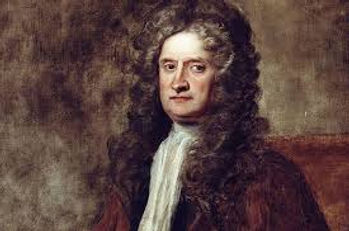
First we should talk about one of the leading scientists who studied the principles of mechanics. Isaac Newton, father of classical physics. One of Newton's most important works concerns the fact that he managed to unify several theories coming from Kepler, Nicolaus Copernicus, Galileo Galilei in a single interpretation. Segundo the story as many of you already know, while Newton was walking in Woolsthorpe State, and sat under an apple tree, e suddenly an apple falls beside him, as he looks up to see where the apple fell from he saw the moon and asked one of the most important questions in science "If an apple falls, does the moon fall too?" The answer that Newton got was that "YES", the Moon is falling towards Earth, by the following ideas.
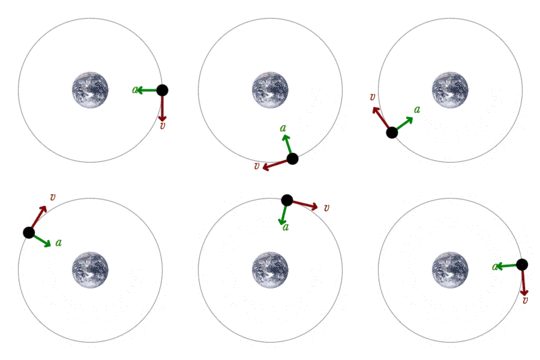
The Earth revolves around the Sun and maintains this orbit due to a force of attraction and the same happens with the Earth and Moon.
The moon is constantly falling towards the Earth, it simply does not fall because of its tangential velocity, that is, when the Moon approaches the Earth its radius (distance) in relation to Earth decreases and sua aceleração aumenta, consequentemente sua velocidade tangencial aumenta, fazendo com a Lua se distancie novamente da Terra.
Newton, realizing why the moon was free falling toward Earth, tried to work on mathematics, and realized that the mathematics of the year 1600 was not enough to understand the motion of a free falling moon, so it is attributed. also to Newton the creation of the principles of the Calculus. At 23 Newton was able to unify one of the four fundamental forces of nature, namely Gravity. Newton was able to explain many of the movements that happened on Earth and the celestial movements through the famous equation called "Universal Gravitation Equation"

Newton, realizing why the moon was free falling toward Earth, tried to work on mathematics, and realized that the mathematics of the year 1600 was not enough to understand the motion of a free falling moon, so it is attributed. also to Newton the creation of the principles of the Calculus. At 23 Newton was able to unify one of the four fundamental forces of nature, namely Gravity. Newton was able to explain many of the movements that happened on Earth and the celestial movements through the famous equation called "Universal Gravitation Equation"
- Newton's third law: For every action there is a reaction, of the same magnitude (Intensity), but in the opposite direction to the applied force.
With all these Laws created by Isaac Newton, we were able to describe the most varied types of movements that we saw in everyday life and even more we can understand, understand and predict the stars and their movements. Newton was the first to unify celestial mechanics along with earth mechanics in the history of physics.